
Sushi Rolls Versus Sashimi – Which to Order
24.10.2026
Sushi Rolls Versus Sashimi - Which to Order
A sushi menu can look deceptively simple until you reach the choice between sushi rolls versus sashimi. One is layered, filling, and often familiar even to first-time sushi diners. The other is beautifully minimal: carefully sliced fish served without rice. Neither is the “better” order in every situation. The right choice depends on your appetite, your taste for raw fish, and the kind of meal you would like to have.
For visitors deciding where to eat in central Sofia, sushi can also be a welcome change from a day of sightseeing, meetings, or walking between NDK and Vitosha Boulevard. Knowing the difference makes ordering more relaxed and helps you choose a plate you will genuinely enjoy.
Sushi Rolls Versus Sashimi: The Essential Difference
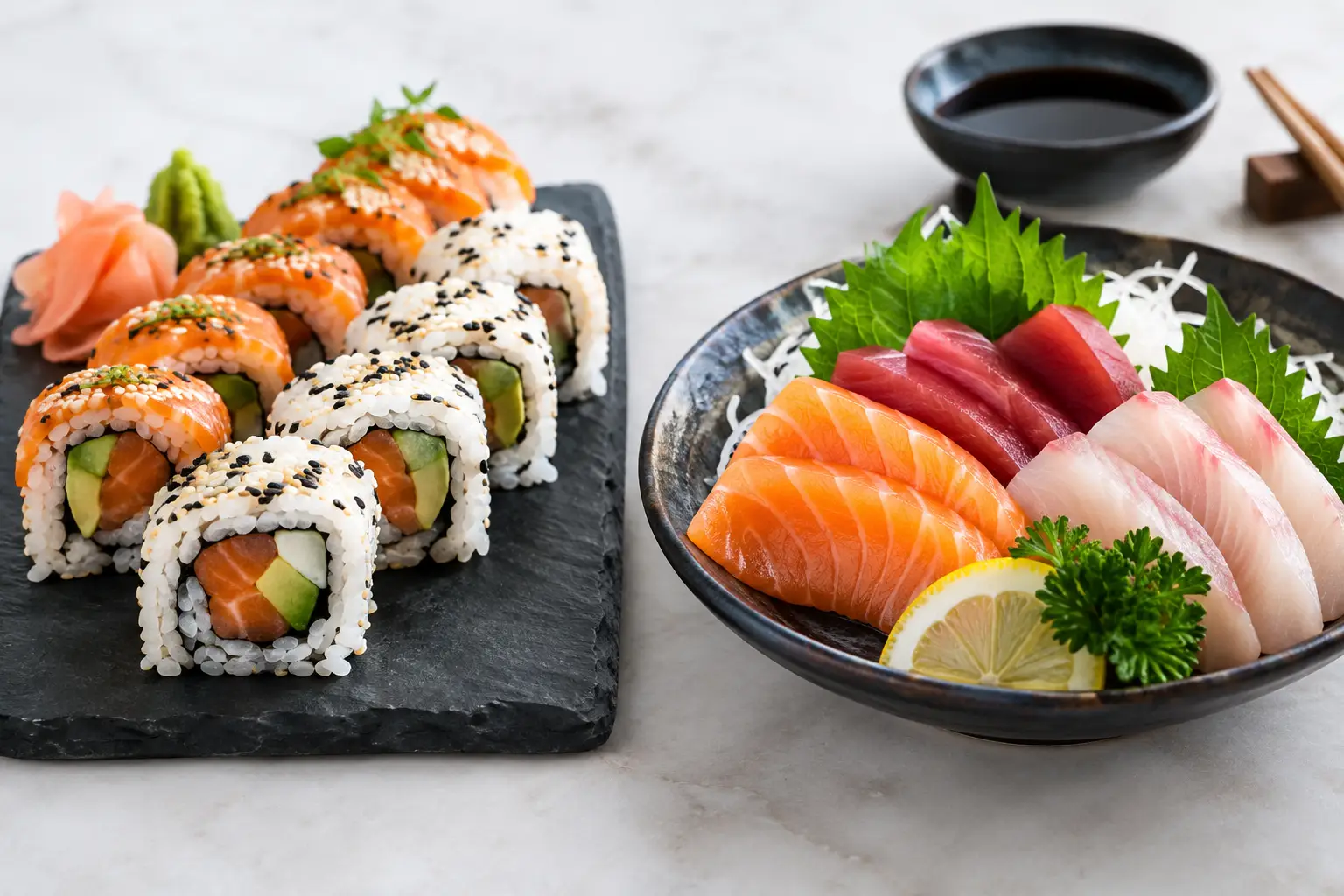
Sashimi is simply thin, artful slices of raw fish or seafood, usually served with soy sauce, wasabi, and pickled ginger. Salmon, tuna, sea bass, shrimp, and octopus are common examples, although selections vary by restaurant. The focus is entirely on the ingredient itself: its freshness, texture, clean flavor, and the skill of the cut.
Sushi rolls, often called maki rolls, combine several ingredients. They usually include vinegared rice and nori seaweed, wrapped around fish, seafood, vegetables, or other fillings. A roll may be simple, such as salmon and avocado, or more elaborate, with several textures and sauces. Some rolls contain raw fish, while others feature cooked seafood or vegetables.
There is one useful point to remember: sushi does not automatically mean raw fish. The word sushi refers primarily to seasoned rice. Sashimi, on the other hand, is typically raw fish or seafood and does not include rice.
Why Sushi Rolls Feel Like a Full Meal
Sushi rolls offer contrast in every bite. The rice brings mild sweetness and substance, seaweed adds a savory note, and fillings can range from crisp cucumber to rich avocado, delicate fish, or cooked shrimp. Sauces, sesame seeds, and toppings can add another layer of flavor.
This makes rolls an easy choice if you are hungry or new to Japanese food. They are satisfying without requiring you to commit to a large portion of one fish. They also suit a shared table well, especially when everyone has different preferences. One person may prefer salmon, another may choose vegetarian ingredients, and another may want a roll with cooked seafood.
Rolls do come with trade-offs. Their flavors can be more complex, but that complexity can hide the character of the fish. A heavily sauced roll may be delicious, yet it is not the best way to understand the taste of tuna or salmon on its own. Rice also makes rolls more filling, which is ideal for lunch or dinner but less appealing if you are planning a larger meal with seafood, pasta, or other dishes.
What Makes Sashimi Special
Sashimi is for diners who enjoy clean, direct flavors. Without rice, sauces, or crunchy additions, the fish is the center of attention. A good slice of salmon can feel buttery and soft, while tuna tends to be firmer and more savory. White fish often has a lighter, more delicate character.
Because it is so simple, sashimi rewards a slower pace. Start with a small amount of soy sauce rather than soaking each piece. Use wasabi carefully, as its heat can easily overwhelm subtle fish. Pickled ginger is best enjoyed between different types of fish to refresh your palate, rather than placed on top of every bite.
Sashimi is often a good option for diners who want a lighter meal or would like to pair sushi with another course. It can work especially well at dinner when you want something refined but not overly filling. It also pairs naturally with a crisp white wine, a dry sparkling wine, or a light cocktail, depending on your taste.
The trade-off is that sashimi is less forgiving for cautious eaters. If you do not enjoy the texture of raw fish, a plate of sashimi may feel too plain or too unfamiliar. In that case, a roll with cooked seafood, vegetables, or a mild fish is usually a more comfortable place to begin.
Which Option Is Better for First-Time Sushi Diners?
For most first-time diners, sushi rolls are the easier introduction. The rice and familiar ingredients create a balanced bite, and the choice of cooked or vegetable-based fillings gives you flexibility. A simple roll with salmon, avocado, cucumber, or shrimp can be a pleasant starting point without too many competing flavors.
That said, first-time sushi diners should not rule out sashimi completely. If you already like raw oysters, ceviche, carpaccio, or lightly prepared seafood, you may appreciate sashimi right away. Order a small portion alongside a roll rather than making it your entire meal. This gives you a useful comparison and lets you discover which style suits you.
A mixed order is often the most enjoyable answer to the sushi rolls versus sashimi question. Choose one or two rolls for variety and share a small sashimi selection if you want to taste the fish in its purest form.
Nutrition and Dietary Considerations
Sashimi is generally lower in carbohydrates because it contains no rice. It can be a satisfying protein-focused choice, though its final nutritional value depends on the type and amount of fish. Fatty fish such as salmon has a richer texture and different nutritional qualities than leaner white fish.
Sushi rolls offer a broader range of nutrients when they include vegetables, fish, and seaweed, but they are usually higher in carbohydrates because of the rice. Fried ingredients, creamy toppings, and sweet sauces can also make some rolls much richer than they appear. There is no need to avoid them – simply choose according to what you want from the meal.
If you have a seafood allergy, are pregnant, have a compromised immune system, or have been advised to avoid raw seafood, speak with the restaurant team before ordering. Cooked rolls or vegetable options may be a better fit. Dietary needs are personal, and asking a clear question is always preferable to guessing.
How to Order for Lunch, Dinner, or a Group
At lunch, a roll is often the practical choice because it is filling and easy to eat at a comfortable pace. Sashimi can be ideal when you want something lighter, particularly if you are continuing your day around central Sofia afterward.
For a relaxed dinner, consider the mood as much as the menu. Rolls encourage sharing and conversation, while sashimi feels more focused and elegant. If you are dining as a couple, ordering both can create a meal with changing textures and flavors. For a group, a selection of rolls usually makes sharing simple, with sashimi added for guests who enjoy raw fish.
La Casa di Sasa, near NDK and Vitosha Boulevard, offers a dedicated sushi selection alongside Italian and Mediterranean dishes. That makes it a comfortable choice for groups where not everyone wants the same cuisine, whether the table is in the mood for sushi, seafood, pasta, pizza, wine, or a relaxed meal in the garden.
A Simple Way to Choose
Choose sushi rolls when you want variety, a more filling plate, cooked options, or an easy dish to share. Choose sashimi when you enjoy raw fish, prefer a lighter order, or want to taste seafood without distractions. If both sound appealing, do not treat the choice as a test. Order a little of each and let the meal unfold at an easy pace.
The best sushi order is the one that fits your appetite and your company. A thoughtful roll, a few slices of sashimi, and time to enjoy the table can turn a simple dinner in Sofia into one of the most pleasant pauses in your day.