
Sushi Etiquette for Beginners Made Simple
10.09.2026
Sushi Etiquette for Beginners Made Simple

The first piece of nigiri arrives, beautifully simple: rice, fish, and a small touch of care. Then comes the quiet question many first-time guests have: should I use chopsticks, add wasabi, or dip it in soy sauce? Sushi etiquette for beginners is less about strict rules than respect for the food, the chef, and the people sharing your table.
Whether you are enjoying sushi after a walk near NDK and Vitosha Boulevard or trying it for the first time while traveling in Sofia, a few easy habits will help you feel comfortable from the moment you sit down.
Sushi Etiquette for Beginners Starts With Comfort
You do not need to be an expert to enjoy sushi properly. In Japan, etiquette can vary by restaurant, occasion, and region. In an informal restaurant, the best approach is simple: be considerate, avoid wasting food, and eat in a way that lets you appreciate each piece.
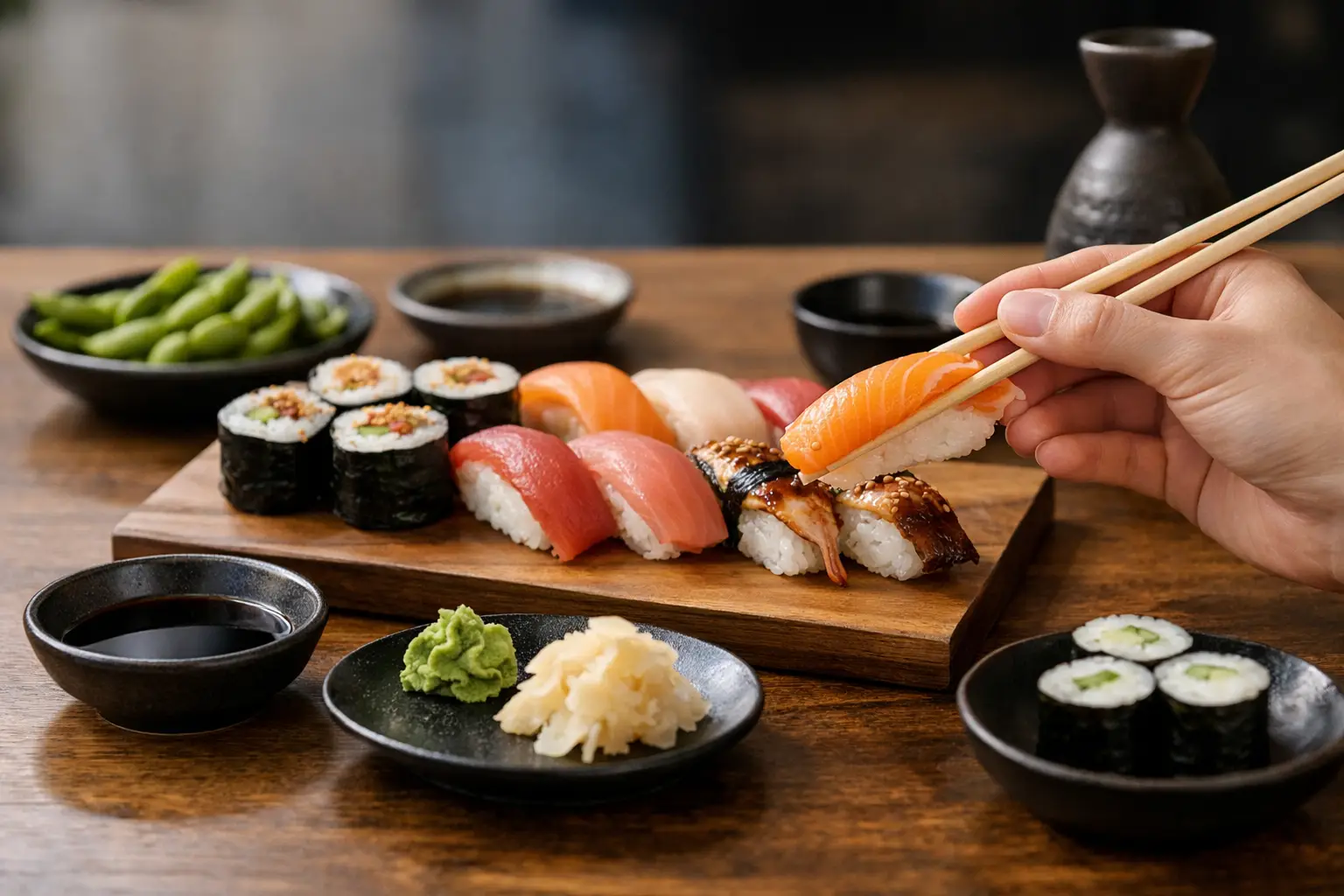
Chopsticks are traditional, but eating nigiri sushi with clean fingers is also completely acceptable. Nigiri is the small hand-formed piece of rice topped with fish or seafood. Your fingers can make it easier to pick up without breaking the rice apart. Sashimi, which is sliced fish or seafood served without rice, is usually eaten with chopsticks.
If chopsticks feel unfamiliar, there is no need to struggle through the meal. Ask for a fork if you need one, particularly when sharing other dishes. A relaxed meal is always better than worrying about doing everything perfectly.
Know What Is on the Plate
Sushi comes in several forms, and knowing the basics makes ordering and eating easier. Nigiri pairs rice with a topping such as salmon, tuna, shrimp, or eel. Maki are rolls wrapped in seaweed, often with fish, vegetables, or other fillings. Uramaki, sometimes called inside-out rolls, have rice on the outside. Sashimi is simply the fish or seafood itself.
A mixed sushi order is a good introduction because it lets you compare textures and flavors. If raw fish is new to you, start with cooked options such as shrimp, grilled eel, or vegetable rolls, then move toward salmon or tuna when you are ready. There is no correct order for everyone. Your preference matters more than proving how adventurous you are.
At a restaurant with a broader menu, sushi can also be part of a longer lunch or dinner. You might begin with sushi and continue with seafood, a fresh salad, pasta, or another Mediterranean dish, depending on the occasion and the people at your table.
How to Use Soy Sauce Without Losing the Flavor
Soy sauce is meant to support sushi, not cover it. Pour a small amount into the shallow dish provided. You can always add more, but a large pool of soy sauce often leads to overly salty bites and unnecessary waste.
For nigiri, gently dip the fish side into soy sauce rather than soaking the rice. Rice absorbs liquid quickly and may fall apart if it is submerged. It can also make the soy sauce cloudy and overly starchy. Turn the piece carefully with your fingers or chopsticks, touch the fish lightly to the sauce, and eat it in one bite when possible.
Rolls are more flexible. A light dip is still enough, especially if the roll already includes a savory sauce. If a piece is too large for one bite, it is fine to take two bites. Just try not to pull it apart before eating, as the filling can spill and the balance of ingredients changes.
Wasabi and Ginger Have Different Jobs
Wasabi brings heat, but it should not overpower the fish. Many sushi pieces are already prepared with an appropriate amount between the fish and rice. Adding a large mound on top can hide the delicate flavor you came to taste.
If you enjoy more spice, add a small amount at a time. It is better to build the heat gradually than to make the first bite unpleasant. Mixing wasabi into soy sauce is common in some casual settings, so it is not a serious mistake. Still, tasting a piece first is a more satisfying way to understand its intended balance.
Pickled ginger is not a topping for sushi. Think of it as a palate cleanser. Eat a small slice between different types of fish or rolls to refresh your taste buds. It is especially useful when moving from a rich salmon roll to a lighter white fish or vegetable option.
Chopsticks: A Few Simple Habits
Hold chopsticks in the way that gives you the most control. The lower chopstick generally stays still against the base of your thumb, while the upper one moves. This takes practice, and nobody expects perfect technique on a first visit.
A few manners are worth remembering because they make the table more pleasant for everyone. Do not rub disposable chopsticks together, as this can suggest that you think the utensils are poor quality. Do not spear food with them unless you truly cannot manage another way. Avoid pointing with chopsticks, waving them while speaking, or leaving them standing upright in a bowl of rice, which has a solemn cultural association in Japan.
When you pause, rest chopsticks on the holder if one is provided, or place them neatly beside your plate. Do not lay them across shared dishes. For food served to the table, use serving utensils when available. If there are none, ask rather than reaching in with the end of your own chopsticks.
Eat at a Comfortable Pace
Sushi is best enjoyed soon after it is served, especially nigiri and sashimi. This does not mean you need to rush. It simply means taking a moment to taste each piece while the rice is at a good temperature and the fish is at its freshest.
If you are sharing, let everyone have a chance to choose. It is considerate to ask before taking the last piece from a shared platter, particularly when there are only one or two pieces of a favorite roll left. For business dinners or larger groups, ordering a few different styles of sushi creates an easy way for everyone to find something they enjoy.
Drinks should complement rather than compete with the meal. Water is always welcome, while wine, beer, sake, or a light cocktail can suit different tastes. There is no single required pairing. Rich rolls may work well with a crisp drink, while delicate sashimi is often best with something light and clean.
Ordering With Confidence in Sofia
For visitors in central Sofia, sushi is a welcome choice when the group has mixed tastes. One person may want seafood or rolls, while another is in the mood for Italian or Mediterranean food. This flexibility can make planning a lunch, dinner, or special evening much easier.
At La Casa di Sasa, near NDK and Vitosha Boulevard, guests can choose from a dedicated sushi selection alongside Italian and Mediterranean dishes, making it a comfortable option when everyone at the table wants something different. If you have allergies, dietary restrictions, or questions about raw versus cooked choices, tell your server before ordering. Clear communication is part of good restaurant etiquette, and it helps the kitchen guide you well.
You can also ask for a recommendation based on your comfort level. Say that you are new to sushi, mention whether you eat raw fish, and explain what flavors you usually like. A helpful server can point you toward mild, cooked, vegetarian, or more traditional options without making the choice feel complicated.
The Only Rule That Really Matters
Sushi carries tradition, craft, and care, but it is also meant to be enjoyed. A little soy sauce on the wrong side of nigiri will not ruin your meal. Neither will using a fork, taking two bites from a large roll, or asking what something is.
Be curious, eat thoughtfully, and let each piece have its own moment. That is a much better introduction to sushi than trying to memorize rules before the first plate reaches the table.

